
NASA Shows Off Asteroid Samples
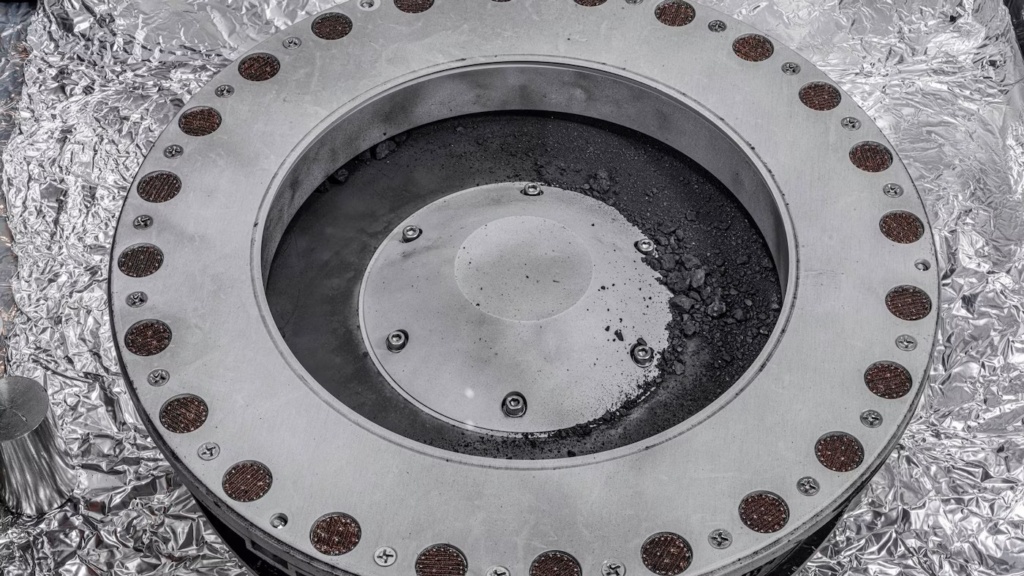
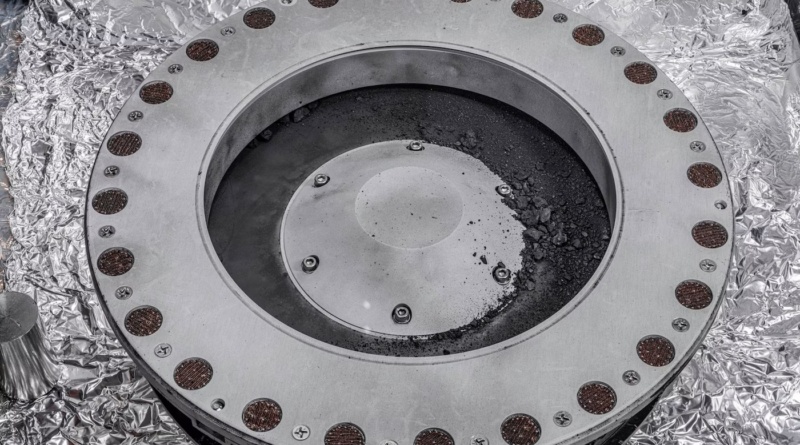
CAPE CANAVERAL, Fla. (AP) — NASA on Wednesday showed off its first asteroid samples delivered last month by a spacecraft — a jumble of black dust and rubble that’s the most ever returned to Earth.
Scientists anticipated getting a cupful but are still unsure how much was grabbed from the carbon-rich asteroid named Bennu, almost 60 million miles (97 million kilometers) away. That’s because the main sample chamber has yet to be opened, officials said during an event at Johnson Space Center in Houston.
“It’s been going slow and meticulous, but the science is already starting,” said the mission’s lead scientist, Dante Lauretta of the University of Arizona.
NASA’s Osiris-Rex spacecraft collected the samples three years ago from the surface of Bennu and then dropped them off sealed in a capsule during a flyby of Earth last month. The expected cupful was far more than the teaspoon or so that Japan brought back from a pair of missions.

Black dust and particles were scattered around the outside edge of the internal sample chamber, according to Lauretta. He said there’s still “a whole treasure chest of extraterrestrial material” to be studied. The samples are priceless, the preserved building blocks from the dawn of the solar system.
No one at Wednesday’s celebration at Johnson got to see any of the samples firsthand — just photos and video. The asteroid pieces were behind locked doors in a new lab at the space center, accessible only to scientists in protective gear.